Blue-Green Glow: The New Federal Signal for Driverless Cars
Regulators are proposing a specific cyan light to help other drivers identify autonomous vehicles on the road.
By Ananya Gupta ·
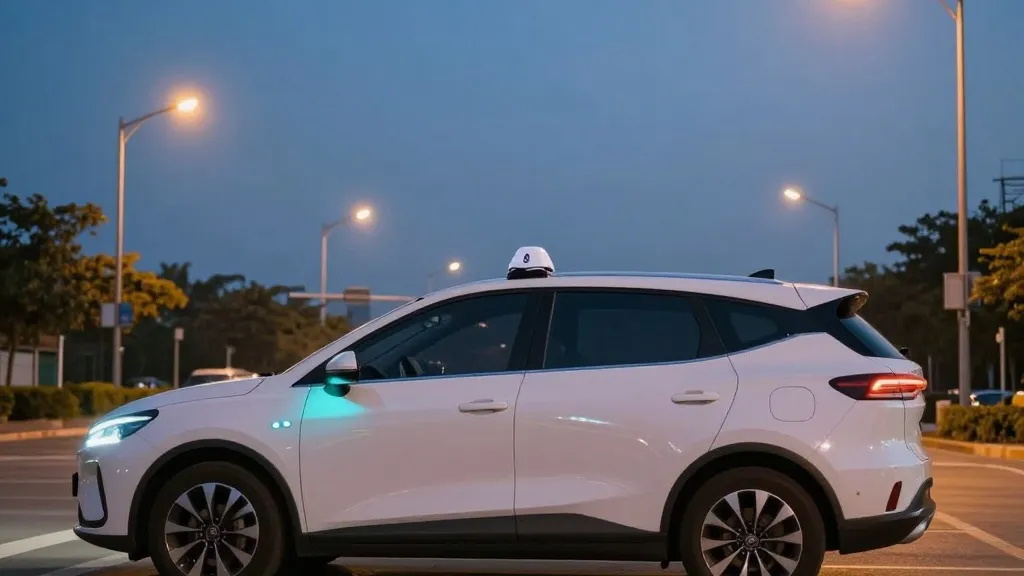
The debate over how driverless cars should announce their presence on the road has finally reached a concrete conclusion from Washington. Federal regulators have stepped in to propose a single, standardized answer: a cyan-colored light. This development marks a significant shift from years of industry discussion regarding flashing text, audio alerts, and custom lighting systems. The goal is to provide a clear and consistent visual cue that an automated driving system is in control, rather than a human driver.
The National Highway Traffic Safety Administration released these proposed changes to Federal Motor Vehicle Safety Standard No. 108. The update rewrites existing rules to better accommodate autonomous vehicles. The agency aims to reduce administrative burdens for car designs without human drivers while standardizing how these vehicles communicate with their surroundings. By establishing specific standards for color, brightness, and location, regulators hope to avoid a confusing patchwork of different signals from various manufacturers.
The choice of cyan is strategic. The automotive industry already utilizes red, amber, white, and flashing blue or red lights for standard functions like brakes, turn signals, and emergency vehicles. Cyan fills a visual gap in the existing spectrum. This allows road users to distinguish an automated vehicle without confusing it with emergency services or standard braking actions. While Mercedes-Benz previously received state-level approval for turquoise lights on its Level 3 Drive Pilot vehicles, the automaker has since moved away from that specific design. However, the precedent supports the federal push for a national standard.
Under the new proposal, these cyan marker lights would remain optional for manufacturers. However, if companies choose to include them, they must adhere to the official federal specifications. This ensures that any driverless vehicle equipped with these lights presents a uniform appearance to law enforcement and other motorists. The proposal applies to major robotaxi operators such as Waymo, Nuro, and Zoox, as well as traditional automakers like GM and Mercedes that are developing autonomous technology.
The regulatory package also includes updates to remove outdated requirements that do not apply to driverless cars. Current rules mandate physical controls such as hazard switches, manual beam shifters, and turn levers. NHTSA proposes eliminating these requirements to allow for more modern vehicle architectures. The agency is also updating the 12.8-volt testing standard to accommodate modern LED systems and is considering removing rules that dictate the specific placement of high-beam lights relative to low-beam lights.
This move is part of a broader effort by the Department of Transportation to streamline the deployment of autonomous vehicles. The government is working to make it easier for automakers to build cars without traditional controls like steering wheels and pedals. However, regulators are still enforcing current rules strictly. Last month, NHTSA opened an audit into the Tesla Cybercab to examine the technical data used in its certification. The review focuses on the vehicle's lack of sideview mirrors, pedals, and a steering wheel, features that are currently required under existing safety standards.
Source: The Verge