Tesla builds proprietary maps to resolve FSD navigation flaws
Tesla’s AI chief confirmed the company is developing its own mapping infrastructure to address persistent errors in speed limit recognition and route selection.
By Mei Lin ·
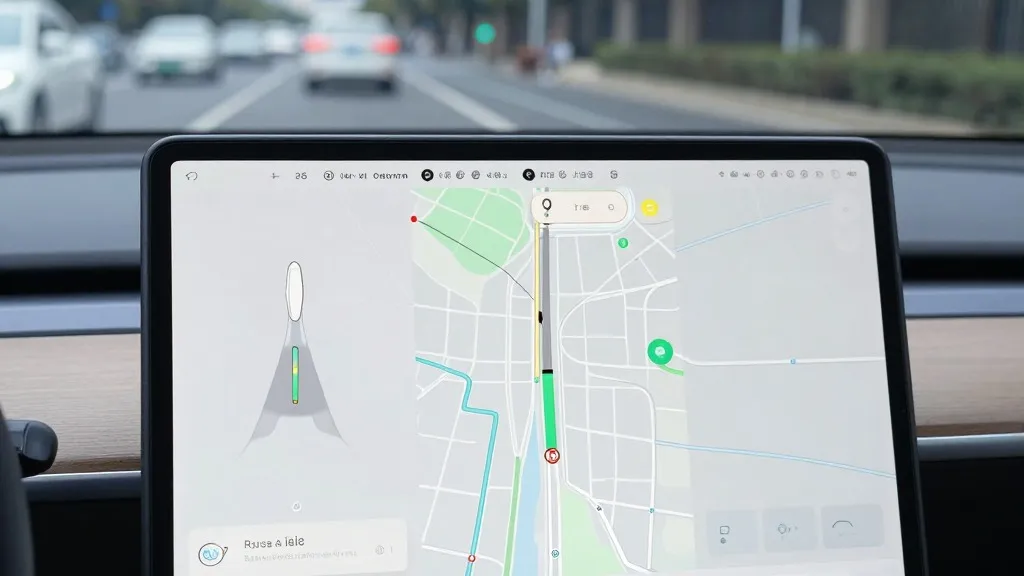
Tesla has officially abandoned its long-held stance that high-precision maps are unnecessary for autonomous driving. The company is now developing its own mapping infrastructure to address persistent errors in its Full Self-Driving system, particularly regarding speed limit recognition and route selection. This strategic pivot marks a significant departure from the company's previous philosophy, which argued that reliance on external data made autonomous systems overly fragile.
The announcement came during Tesla’s Q3 2026 earnings call, where the company’s head of AI, Ashok Elluswamy, detailed the new initiative. The decision was prompted by direct feedback from shareholders who noted that mapping issues remain a primary source of frustration for FSD users. A retail investor specifically cited speed limits, parking, and typical route choices as the most common problems, questioning why Tesla continues to rely on third-party navigation data rather than building its own solution.
Elluswamy agreed with the investor's assessment, stating that Tesla should not depend on external providers for mapping data. He explained that the company is constructing a new AI-based architecture for mapping and navigation. This system will be fed by data collected from the entire Tesla fleet, allowing it to learn from collective driving experiences. The new maps will also be designed to adapt to individual driver preferences and respond to voice commands, creating a more personalized navigation experience.
The implementation of this technology will occur in phases. Elluswamy indicated that the system will initially handle the beginning and end of trips with the upcoming FSD version 15. Over the following months, the new mapping layer is expected to take over broader navigation tasks, including parking and destination handling. This gradual rollout suggests that the company is integrating the new data layer into its existing software stack rather than replacing the entire system at once.
This move contradicts public statements made by CEO Elon Musk over the past decade. In 2019, during Tesla’s Autonomy Day, Musk described high-precision lane maps as a "really bad idea" that made self-driving systems "extremely brittle." At the time, the company argued that it could solve driving with cameras and AI alone, dismissing the use of lidar and detailed maps as crutches used by competitors like Waymo. Seven years later, Tesla is using its own fleet to build the very type of environmental data layer that Musk previously criticized.
Critics argue that the specific issues Tesla is trying to fix reveal a limitation in its vision-only approach. Problems with speed limits, parking, and route planning are fundamentally about understanding the physical environment. In late September, a Belgian road safety group reported that FSD vehicles exceeded speed limits in 55% of the 30 km/h zones tested in Brussels. In the United States, the National Highway Traffic Safety Administration is currently weighing an investigation into claims that Tesla Robotaxis have sped through active school zones.
The new strategy brings Tesla’s operational model closer to that of its competitors. Waymo, for example, maps cities by driving sensor-equipped vehicles through them before launching service and continues to update those maps as its fleet operates. Tesla is now adopting a similar model where its cars collect visual data that feeds into a Tesla-built map. While Tesla does not use lidar, the core concept of using a fleet to build and maintain a detailed environmental map is nearly identical to the approach used by Waymo.
This development also aligns with the current operational structure of Tesla’s Robotaxi service. The company currently operates in small, geofenced areas within specific cities, rather than offering citywide or nationwide coverage. While Tesla is not currently advertising centimeter-level high-definition maps, the continued refinement of its fleet-built data could lead to a similar level of detail in the future. The shift suggests that a map built from millions of vehicles could become a significant competitive advantage.
The company has pushed the release of unsupervised FSD in consumer vehicles to the second quarter of 2027. For now, the technology remains primarily within the Robotaxi fleet. As Tesla integrates its new mapping architecture, the focus will be on how effectively the system can interpret environmental cues that have previously caused errors. The success of this initiative may determine whether the company can meet its timeline for broader consumer adoption without significant delays.
Market reactions have been mixed, with some analysts viewing the move as a necessary correction and others seeing it as an admission of earlier strategic missteps. Regardless of the perspective, the industry is now watching to see if Tesla’s new mapping layer can resolve the specific friction points that have hindered FSD’s reliability. The coming months will provide the first clear indicators of whether this new infrastructure can deliver the consistency required for wider public trust.
Source: Electrek