3 Days: The New UK Survival Standard
Households across Britain are shifting from casual shopping to strategic stockpiling in response to official calls for a three-day emergency reserve.
By Rebecca Dawson ·
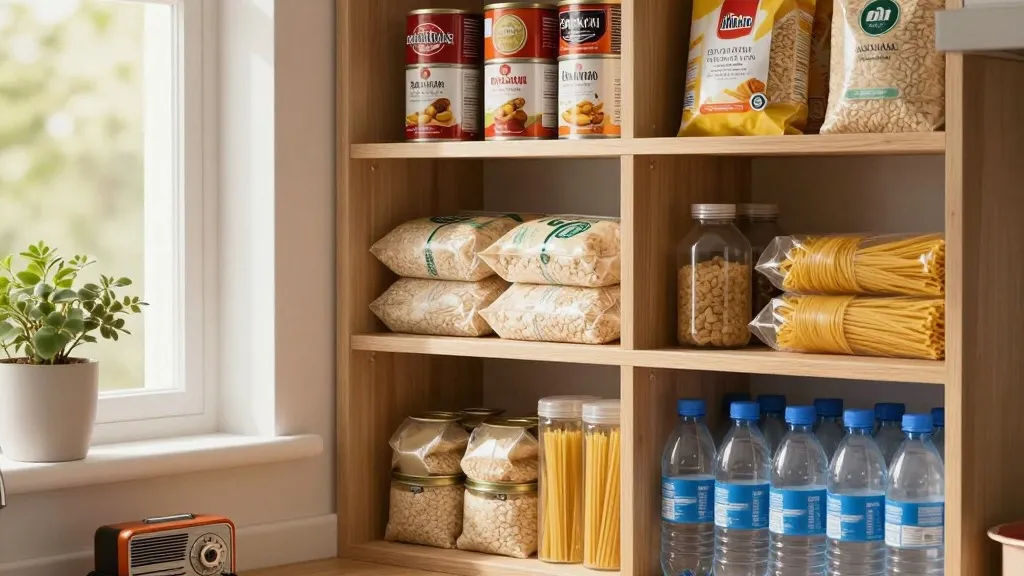
Shelves in British supermarkets are filling with items that might otherwise seem like set dressing for a catastrophe movie.
The UK government launched a new campaign on Thursday urging citizens to secure three days' worth of supplies to handle a broad spectrum of potential crises. While the official push is recent, many families had already begun building these reserves months prior after receiving similar signals from ministers. The move comes amid growing concerns about Russian state-sponsored terrorism and the escalating impacts of the climate crisis. For a rising number of residents, dried foods, bottled water, and backup power sources have become standard additions to weekly grocery lists rather than last-minute panic purchases.
In Hythe, Hampshire, Lawrence Barratt has been methodically adding tinned and dried goods to his regular shopping trips for the past two weeks. His cart now includes beans, soups, chilli con carne, noodles, and rice, all chosen because they can be prepared using the bottled water he is also accumulating gradually. Barratt aims to have enough provisions to feed two people for three days. He is also assembling a first aid kit, a battery-powered FM radio, and a torch. A portable power bank originally bought for camping plays a key role in his plan, as he believes it can charge phones, power a television, and even run a small fan heater if needed.
Barratt noted that he started his preparation after seeing the government's advice online, a decision also influenced by the empty shelves seen during the initial lockdown in 2020. He said the official Be Ready campaign website made him realize he would be "completely unprepared for anything" without these basic stocks. This shift in mindset is not unique to rural Hampshire. In Greenwich, London, Marco Camurri and his family are gathering pasta, passata, stock cubes, tinned food, bottled water, medicines, and toilet paper. Camurri, who has relatives in continental Europe, said his household could temporarily relocate if the UK entered war or if London faced direct attacks or severe infrastructure failure that threatened their employment.
Camurri's preparations extend beyond food storage. The family keeps wood in a small garden to light a barbecue and boil water if necessary. They maintain charged power banks, USB rechargeable flashlights, matches, and lighters. The household also tries to keep its fuel tank above 50 percent, ensuring approximately 300 miles of driving range. They began this process a few months ago when reports of supply chain disruptions linked to the El Niño weather pattern emerged. Because they consume the items they stock, Camurri described the effort as equivalent to one extra week of shopping for staples. The family is currently creating a spreadsheet to track expiry dates for what they have dubbed their "Doomsday Stash" to ensure items are used and replaced before they spoil.
Jack Davenport, living in North Shields on the River Tyne, also cited El Niño as a catalyst for his stockpiling efforts. However, he expressed difficulty in judging the scale of the numerous threats facing the country. He pointed to climate-related disasters, Russian shadow threats, artificial intelligence developments, and interest rate rises driven by energy insecurity. Davenport argued that the country's physical and technological infrastructure is "creaking and outdated." He suggested that the government aims to "reduce long-term panic" by presenting these events as possible, noting that several generations have not faced the hardship common before the war.
Not every resident accepts the new guidance with enthusiasm. Deirdre O'Sullivan, from Leicester, called the advice "daft" and said it reminded her of 1970s instructions to hide under a table during a nuclear attack. She argued that the three-day window looks inadequate for a genuine emergency. O'Sullivan contended that any danger to drinking water should be anticipated with greater precision. She also suggested that an extreme food shortage would likely become apparent over a much longer period, making a short-term stockpile less critical than a longer-term strategy.
In her critique, O'Sullivan compared the government's approach to a scenario from the television series Yes Minister. She suggested the guidance looks like something the show's characters would devise to demonstrate that a policy exists, even if that policy is "clearly totally useless." Despite the skepticism, the visual evidence in shops and on household counters suggests a significant cultural shift toward self-reliance in the face of modern uncertainty.
Source: The Guardian