Ukraine Regains High-Speed Satellite Link Amid Intensified Aerial Strikes
President Zelenskyy confirmed the restoration of critical military communications speed just hours before a massive Russian drone assault.
By Ahmed Mansour ·
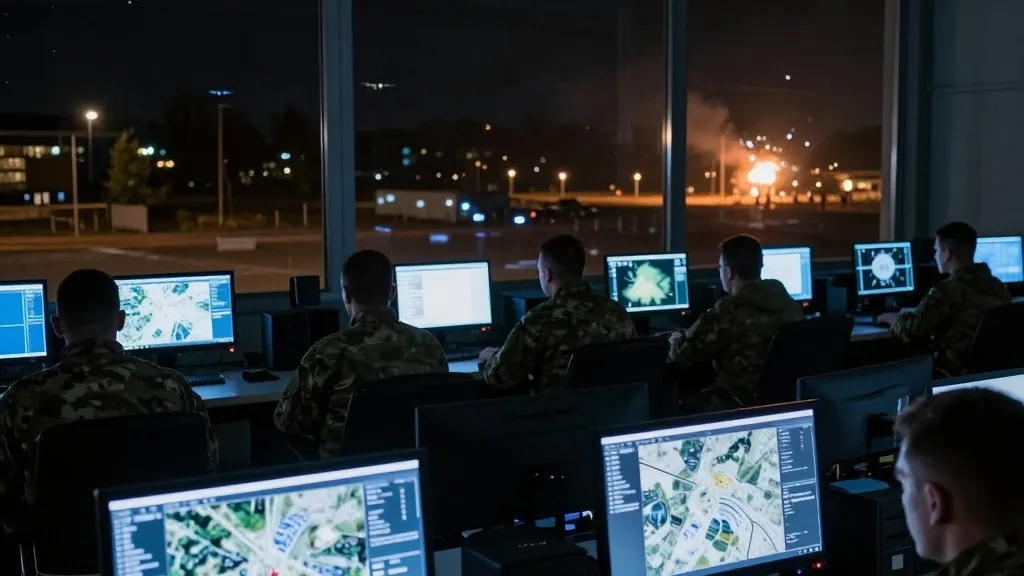
Ukraine’s military satellite communications have returned to full operational speed, according to President Volodymyr Zelenskyy. Speaking on October 24, the president stated that the Starshield system is now functioning at levels deemed necessary for frontline logistics. This development ends a frustrating two-week period where connection speeds were capped, a limitation that severely hampered the country’s ability to track and intercept fast-moving threats. Zelenskyy described the fix as highly significant for maintaining defensive capabilities against jet-powered Shahed drones.
The restored speeds have been verified by Ukrainian defense officials. Defense Minister Yevheniy Khmara reported that connectivity was re-established on equipment moving at velocities exceeding 400 kilometers per hour. Prior to this update, data indicated that links were dropping at roughly 161 kilometers per hour. Khmara attributed the resolution to direct dialogue and the president’s persistent advocacy, although the specific entity that imposed the earlier limits remains unclear to the public.
Speculation regarding the cause of the slowdown has intensified. Serhiy Beskrestnov, a defense technology adviser, hinted at a connection to recent friction between Kyiv and Washington, though no formal link has been proven. The Trump administration has denied that the president or any US official requested the changes. However, Elon Musk has noted that the US government controls Starshield, with final decisions on speed resting with the military and President Donald Trump. Trump recently said he would straighten out any problems if they existed, following reports that he urged Musk to lift the restrictions.
The timing of the restoration coincides with heightened diplomatic tensions. In the past fortnight, Trump announced a deal facilitating Russian diesel exports and waived sanctions that were set to take effect. He also urged Kyiv to pause attacks on Russian oil refineries, citing high diesel prices. Zelenskyy initially considered this pause but declared Ukraine done with unilateral stops after Putin ordered continued strikes on Ukrainian territory.
Combat operations continued through the night with significant intensity. Ukrainian air defense units reported downing 100 of the 130 drones launched by Russia. These attacks struck fifteen different locations, resulting in at least two fatalities. In retaliation, Ukrainian forces targeted two industrial sites and a military airport within Russia. One facility in Oryol produces components for cruise and ballistic missiles, while another in Togliatti manufactures rubber products essential for solid rocket fuel.
Infrastructure damage also spread to occupied territories. Most of Crimea experienced a near-total power outage in the early morning hours, affecting major cities including Simferopol and Sevastopol. Russian authorities blamed a drone strike on main power lines outside the peninsula. Ukrainian monitoring channels reported a fire at the Taman electrical substation in Russia’s Krasnodar region, which supplies power to Crimea via the Kerch Strait. As a fifth wartime winter approaches, peace negotiations remain stalled with no concessions from the Kremlin.
The situation underscores the critical importance of reliable satellite links for modern warfare. With the speed cap lifted, Ukrainian forces can now better coordinate their defenses. However, the underlying diplomatic disputes between Kyiv and Washington persist, leaving open questions about the long-term stability of this vital technology.
Source: RFE/RL